Article by Leo Zagami
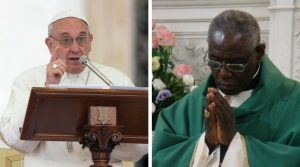
In 2017, Pope Francis wrote a letter to Cardinal Robert Sarah, and there hasn’t been such a public spanking of a high-ranking prelate since the time of the Second Vatican Council. This is the remarkable letter Pope Francis wrote to Cardinal Robert Sarah. At issue was a statement by Sarah that suggested Liturgiam Authenticam remain normative, and the Vatican’s right to impose liturgical translations on various episcopal conferences, rather than Pope Francis’ recent document Motu Proprio (“on one’s own initiative”) on the subject, Magnum Principium (“The Great Principle”), which restored the central role in approving translations to the world’s bishops’ conferences. Sarah’s commentary appeared in the French journal L’Homme Nouveau and was translated into other languages.
Since then, if you open a liberal Catholic periodical you are likely to find a call for the dismissal of the Guinean Cardinal who heads the Vatican’s Congregation for Divine Worship. However, Cardinal Robert Sarah is now publishing the third of his book-length interviews with Nicolas Diat, The Day is Far Spent, on the moral crisis of the West. Strangely enough, Ignatius Press, connected to the Jesuits, has announced the 2019 publication of this controversial book now available for pre-order on their website. Ignatius Press, named for Saint Ignatius Loyola, founder of the Jesuit Order, is a Catholic publishing house based in San Francisco, California, that was founded in 1978 by Father Joseph Fessio SJ, a Jesuit priest but also a former pupil of Pope Benedict XVI. An interesting take on the pope’s letter is found at First Things, where Italian Vaticanist Marco Tosatti thinks the “attacks” on Sarah are made because the people around Pope Francis do not want to see this cardinal elected as the next pope.
“Sarah’s profile is one that is ideal for the Papacy: it combines pastoral experience at home and internationally in the Curia”,says Father Bernardo Cervellera, Director of AsiaNews, the agency of the Pontifical Institute for foreign missions. Sarah has been a bishop in Africa, a prisoner of war, and is now head of an important dicastery in the Vatican. He took the place of Etchegeray as “the man of the impossible papal missions”in the diplomatic and humanitarian fields from Lebanon to Southeast Asia, and is now openly challenging Pope Francis.
He was nicknamed, The Black Wojtyla during the last papal conclave, seen as a force able to unite foreigners, the Curia and the White House, just as the spiritual father of Solidarnosc did back in 1978. Could Cardinal Robert Sarah be the “caput nigrum,” the dark-skinned Pope of the lost prophecy? In regards to the use of the word “Black” associated with the Pope, some believe it refers to an evil nature, thus, the last Pope will be an evil Pope, or a Jesuit, because the head of the Jesuit order is known as the Black Pope. Others believe that it refers to skin color; thus, someone of African descent that will be elected Pope. In recent papal elections, several African candidates were considered, and amongst them the more credible name was, indeed, Cardinal Robert Sarah. The Vatican Cardinal discusses his hard-hitting new book in this exclusive interview with La Nef translated from French by Zachary Thomas (Original).
1) In the first part of your book, you describe “a spiritual and religious collapse.” How does this collapse manifest itself? Does it only affect the West or are other regions of the world, such as Africa, also affected by it?
The spiritual crisis involves the entire world. But its source is in Europe. People in the West are guilty of rejecting God. They have not only rejected God. Friedrich Nietzsche, who may be considered the spokesman of the West, has claimed: “God is dead! God remains dead! And we have killed him…” We have murdered God. In view of God’s death among men, Nietzsche would replace him with a prophetic “Superman.”
The spiritual collapse thus has a very Western character. In particular, I would like to emphasize the rejection of fatherhood. Our contemporaries are convinced that, in order to be free, one must not depend on anybody. There is a tragic error in this. Western people are convinced that receiving is contrary to the dignity of human persons. But civilized man is fundamentally an heir, he receives a history, a culture, a language, a name, a family. This is what distinguishes him from the barbarian. To refuse to be inscribed within a network of dependence, heritage, and filiation condemns us to go back naked into the jungle of a competitive economy left to its own devices. Because he refuses to acknowledge himself as an heir, man is condemned to the hell of liberal globalization in which individual interests confront one another without any law to govern them besides profit at any price.
In this book, however, I want to suggest to Western people that the real cause of this refusal to claim their inheritance and this refusal of fatherhood is the rejection of God. From Him we receive our nature as man and woman. This is intolerable to modern minds. Gender ideology is a Luciferian refusal to receive a sexual nature from God. Thus some rebel against God and pointlessly mutilate themselves in order to change their sex. But in reality they do not fundamentally change anything of their structure as man or woman. The West refuses to receive, and will accept only what it constructs for itself. Transhumanism is the ultimate avatar of this movement. Because it is a gift from God, human nature itself becomes unbearable for western man.
This revolt is spiritual at root. It is the revolt of Satan against the gift of grace. Fundamentally, I believe that Western man refuses to be saved by God’s mercy. He refuses to receive salvation, wanting to build it for himself. The “fundamental values” promoted by the UN are based on a rejection of God that I compare with the rich young man in the Gospel. God has looked upon the West and has loved it because it has done wonderful things. He invited it to go further, but the West turned back. It preferred the kind of riches that it owed only to itself.
Africa and Asia are not yet entirely contaminated by gender ideology, transhumanism, or the hatred of fatherhood. But the Western powers’ neo-colonialist spirit and will to dominate pressures countries to adopt these deadly ideologies.
2) You write that “Christ never promised his faithful that they would be in the majority” (pg. 34), and you go on: “Despite the missionaries’ greatest efforts, the Church has never dominated the world. The Church’s mission is a mission of love, and love does not dominate” (pg. 35). Earlier, you wrote that “it is the ‘small remnant’ that has saved the faith.” If you will pardon a bold question: What is the problem exactly, seeing that this “small remnant” does in fact exist currently and manages to survive even in a world hostile to the faith?
Christians must be missionaries. They cannot keep the treasure of the Faith for themselves. Mission and evangelization remain an urgent spiritual task. And as St. Paul says, every Christian should be able to say “If I proclaim the gospel, this gives me no ground for boasting, for an obligation is laid on me, and woe to me if I do not proclaim the gospel!” (1 Cor 9:16). Further, “God desires everyone to be saved and to come to the knowledge of the truth” (1 Tim 2:4). How can we do nothing when so many souls do not know the only truth that sets us free: Jesus Christ? The prevailing relativism considers religious pluralism to be a good in itself. No! The plenitude of revealed truth that the Catholic Church has received must be transmitted, proclaimed, and preached.
The goal of evangelization is not world domination, but the service of God. Don’t forget that Christ’s victory over the world is…the Cross! It is not our intention to take over the power of the world. Evangelization is done through the Cross.
The martyrs are the first missionaries. Before the eyes of men, their life is a failure. The goal of evangelization is not to “keep count” like social media networks that want to “make a buzz.” Our goal is not to be popular in the media. We want that each and every soul be saved by Christ. Evangelization is not a question of success. It is a profoundly interior and supernatural reality.
3) I’d like to go back to one of your points in the previous question. Do you mean to say that European Christendom, where Christianity was able to establish itself throughout the whole of society, was only a sort of interlude in history; that it should not be taken as a model in the sense that in Europe Christianity “dominated” and imposed itself through a kind of social coercion?
A society permeated by the Faith, the Gospel, and natural law is something desirable. It is the job of the lay faithful to construct it. That is in fact their proper vocation. They work for the good of all when they build a city in conformity with human nature and open to Revelation. But the more profound goal of the Church is not to construct a particular model society. The Church has received the mandate to proclaim salvation, which is a supernatural reality. A just society disposes souls to receive the gift of God, but it cannot give salvation. On the other hand, can there be a society that is just and in conformity with the natural law without the gift of grace working in souls? There is great need to proclaim the heart of our Faith: only Jesus saves us from sin. It must be emphasized, however, that evangelization is not complete when it takes hold of social structures. A society inspired by the Gospel protects the weak against the consequences of sin. Conversely, a society cut off from God quickly turns into a dictatorship and becomes a structure of sin, encouraging people toward evil. That is why we can say that there can be no just society without a place for God in the public sphere. A state that officially espouses atheism is an unjust state. A state that relegates God to the private sphere cuts itself off from the true source of rights and justice. A state that pretends to found rights on good will alone, and does not seek to found the law on an objective order received from the Creator, risks falling into totalitarianism.
4) Over the course of European history, we have moved from a society in which the group outweighed the person (the holism of the Middle Ages) – a type of society that still exists in Africa and continues to characterize Islam – to a society in which the person is emancipated from the group (individualism). We might also say, broadly speaking, that we have passed from a society dominated by the quest for truth to a society dominated by the quest for freedom. The Church herself has developed her doctrine in the face of this evolution, proclaiming the right to religious liberty at Vatican II. How do you see the position of the Church toward this evolution? Is there a balance to be struck between the two poles of “truth” and “freedom,” whereas so far we have merely gone from one excess to the other?
It is not correct to speak of a “balance” between two poles: truth and freedom. In fact, this manner of speaking presupposes that these realities are external to and in opposition to one another. Freedom is essentially a tending toward what is good and true. The truth is meant to be known and freely embraced. A freedom that is not itself oriented and guided by truth is nonsensical. Error has no rights. Vatican II recalled the fact that truth can only be established by the force of truth itself, and not by coercion. It also recalled that respect for persons and their freedom should not in any way make us indifferent in relation to the true and the good.
Revelation is the breaking in of divine truth into our lives. It does not constrain us. In giving and revealing Himself, God respects the freedom that He Himself created. I believe that the opposition between truth and freedom is the fruit of a false conception of human dignity.
Modern man hypostatizes his freedom, making it an absolute to the point of believing that it is threatened when he accepts the truth. However, to accept the truth is the most beautiful act of freedom that man can perform. I believe that your question reveals how deeply the crisis of the Western conscience is really in the end a crisis of faith. Western man is afraid of losing his freedom by accepting the gift of true faith. He prefers to close himself up inside a freedom that is devoid of content. The act of faith is an encounter between freedom and truth. That is why in the first chapter of my book I have insisted on the crisis of faith. Our freedom comes to fulfillment when it says “yes” to revealed truth. If freedom says “no” to God, it denies itself. It asphyxiates.
5) You dwell at length on the crisis of the priesthood and argue for priestly celibacy. What do you see as the primary cause in the cases of sexual abuse of minors by priests, and what do you think of the summit that just took place in Rome on this question?
I think that the crisis of the priesthood is one of the main factors in the crisis of the Church. We have taken away priests’ identity. We have made priests believe that they need to be efficient men. But a priest is fundamentally the continuation of Christ’s presence among us. He should not be defined by what he does, but by what he is: ipse Christus, Christ Himself. The discovery of many cases of sexual abuse against minors reveals a profound spiritual crisis, a grave, deep, and tragic rupture between the priest and Christ.
Of course, there are social factors: the crisis of the ‘60s and the sexualization of society, which rebound on the Church. But we must have the courage to go further. The roots of this crisis are spiritual. A priest who does not pray or makes a theatre out of the sacraments, especially the Eucharist, a priest who only confesses rarely and who does not live concretely like another Christ, is cut off from the source of his own being. The result is death. I have dedicated this book to the priests of the whole world because I know that they are suffering. Many of them feel abandoned.
We, the bishops, bear a large share of responsibility for the crisis of the priesthood. Have we been fathers to them? Have we listened to them, understood and guided them? Have we given them an example? Too often dioceses are transformed into administrative structures. There are so many meetings. The bishop should be the model for the priesthood. But we ourselves are far from being the ones most ready to pray in silence, or to chant the Office in our cathedrals. I fear that we lose ourselves in secondary, profane responsibilities.
The place of a priest is on the Cross. When he celebrates Mass, he is at the source of his whole life, namely the Cross. Celibacy is a concrete means that permits us to live this mystery of the Cross in our lives. Celibacy inscribes the Cross in our very flesh. That is why celibacy is intolerable for the modern world. Celibacy is a scandal for modern people, because the Cross is a scandal.
In this book, I want to encourage priests. I want to tell them: love your priesthood! Be proud to be crucified with Christ! Do not fear the world’s hate! I want to express my affection as a father and brother for the priests of the whole world.
6) In a book that has caused quite a stir [In the Closet of the Vatican, by Frédéric Martel], the author explains that there are many homosexual prelates in the Vatican. He lends credibility to Mgr Viganò’s denunciation of the influence of a powerful gay network in the heart of the Curia. What do you think of this? Is there a homosexual problem in the heart of the Church and if so, why is it a taboo?
Today the Church is living with Christ through the outrages of the Passion. The sins of her members come back to her like strikes on the face. Some have tried to instrumentalize these sins in order to put pressure on the bishops. Some want them to adopt the judgments and language of the world. Some bishops have caved in to the pressure. We see them calling for the abandonment of priestly celibacy or making unsound statements about homosexual acts. Should we be surprised? The Apostles themselves turned tail in the Garden of Olives. They abandoned Christ in His most difficult hour.
We must be realistic and concrete. Yes, there are sinners. Yes, there are unfaithful priests, bishops, and even cardinals who fail to observe chastity. But also, and this is also very grave, they fail to hold fast to doctrinal truth! They disorient the Christian faithful by their confusing and ambiguous language. They adulterate and falsify the Word of God, willing to twist and bend it to gain the world’s approval. They are the Judas Iscariots of our time.
Sin should not surprise us. On the other hand, we must have the courage to call it by name. We must not be afraid to rediscover the methods of spiritual combat: prayer, penance, and fasting. We must have the clear-sightedness to punish unfaithfulness. We must find the concrete means to prevent it. I believe that without a common prayer life, without a minimum of common fraternal life between priests, fidelity is an illusion. We must look to the model of the Acts of the Apostles.
With regard to homosexual behaviors, let us not fall into the trap of the manipulators. There is no “homosexual problem” in the Church. There is a problem of sins and infidelity. Let us not perpetuate the vocabulary of LGBT ideology. Homosexuality does not define the identity of persons. It describes certain deviant, sinful, and perverse acts. For these acts, as for other sins, the remedies are known. We must return to Christ, and allow him to convert us. When the fault is public, the penalties provided for by Church law must be applied. Punishment is merciful, an act of charity and fraternal love. Punishment restores the damage done to the common good and permits the guilty party to redeem himself. Punishment is part of the paternal role of bishops. Finally, we must have the courage to clearly apply the norms regarding the acceptance of seminarians. Men whose psychology is deeply and permanently anchored in homosexuality, or who practice duplicity and lying, cannot be accepted as candidates for the priesthood.
7) One chapter is dedicated to the “crisis of the Church.” When precisely do you place the beginning of this crisis and what does it consist in? In particular, how do you relate the “crisis of faith” to the crisis of “moral theology.” Does one precede the other?
The crisis of the Church is above all a crisis of the faith. Some want the Church to be a human and horizontal society; they want it to speak the language of the media. They want to make it popular. They urge it not to speak about God, but to throw itself body and soul into social problems: migration, ecology, dialogue, the culture of encounter, the struggle against poverty, for justice and peace. These are of course important and vital questions before which the Church cannot shut her eyes. But a Church such as this is of interest to no one. The Church is only of interest because she allows us to encounter Jesus. She is only legitimate because she passes on Revelation to us. When the Church becomes overburdened with human structures, it obstructs the light of God shining out in her and through her. We are tempted to think that our action and our ideas will save the Church. It would be better to begin by letting her save herself.
I think we are at a turning point in the history of the Church. The Church needs a profound, radical reform that must begin by a reform of the life of her priests. Priests must be possessed by the desire for holiness, for perfection in God and fidelity to the doctrine of Him who has chosen and sent them. Their whole being and all their activities must be put to the service of sanctity. The Church is holy in herself. Our sins and our worldly concerns prevent her holiness from diffusing itself. It is time to put aside all these burdens and allow the Church finally appear as God made Her. Some believe that the history of the Church is marked by structural reforms. I am sure that it is the saints who change history. The structures follow afterwards, and do nothing other than perpetuate the what the saints brought about.
We need saints who dare to see all things through the eyes of faith, who dare to be enlightened by the light of God. The crisis of moral theology is the consequence of a voluntary blindness. We have refused to look at life through the light of the Faith.
In the conclusion of my book, I speak about a poison from which are all suffering: a virulent atheism. It permeates everything, even our ecclesiastical discourse. It consists in allowing radically pagan and worldly modes of thinking or living to coexist side by side with faith. And we are quite content with this unnatural cohabitation! This shows that our faith has become diluted and inconsistent! The first reform we need is in our hearts. We must no longer compromise with lies. The Faith is both the treasure we have to defend and the power that will permit us to defend it.
8) The second and third parts of your book are about crisis in western societies. The subject is so vast, and you touch on so many important points–from the expansion of the “culture of death” to the problems of consumerism tied to global liberalism, passing through questions of identity, transmission, Islamism, etc.–that it is impossible to address them all. Among these problems, which seem to you to be the most important and what are the principal causes for the decline of the West?
First I would like to explain why I, a son of Africa, allow myself to address the West. The Church is the guardian of civilization. I am convinced that western civilization is passing at present through a mortal crisis. It has reached the extreme of self-destructive hate. As during the fall of Rome, elites are only concerned to increase the luxury of their daily life and the peoples are being anesthetized by ever more vulgar entertainment. As a bishop, it is my duty to warn the West! The barbarians are already inside the city. The barbarians are all those who hate human nature, all those who trample upon the sense of the sacred, all those who do not value life, all those who rebel against God the Creator of man and nature. The West is blinded by science, technology, and the thirst for riches. The lure of riches, which liberalism spreads in hearts, has sedated the peoples. At the same time, the silent tragedy of abortion and euthanasia continue and pornography and gender ideology destroy children and adolescents. We are accustomed to barbarism. It doesn’t even surprise us anymore! I want to raise a cry of alarm, which is also a cry of love. I do so with a heart full of filial gratitude for the Western missionaries who died in my land of Africa and who communicated to me the precious gift of faith in Jesus Christ. I want to follow their lead and receive their inheritance!
How could I not emphasize the threat posed by Islamism? Muslims despise the atheistic West. They take refuge in Islamism as a rejection of the consumer society that is offered to them as a religion. Can the West present them the Faith in a clear way? For that it will have to rediscover its Christian roots and identity. To the countries of the third world, the West is held out as a paradise because it is ruled by commercial liberalism. This encourages the flow of migrants, so tragic for the identity of peoples. A West that denies its faith, its history, its roots, and its identity is destined for contempt, for death, and disappearance.
But I would like to point out that everything is prepared for a renewal. I see families, monasteries, and parishes that are like oases in the middle of a desert. It is from these oases of faith, liturgy, beauty, and silence that the West will be reborn.
9) You end this beautiful book with a section entitled “Rediscovering Hope: The Practice of the Christian Virtues.” What do you mean by this? In what way can practicing these virtues be a remedy for the multifarious crisis we have spoken about in this interview?
We should not imagine a special program that could provide a remedy for the current multi-faceted crisis. We have simply to live our Faith, completely and radically. The Christian virtues are the Faith blossoming in all the human faculties. They mark the way for a happy life in harmony with God. We must create places where they can flourish. I call upon Christians to open oases of freedom in the midst the desert created by rampant profiteering. We must create places where the air is breathable, or simply where the Christian life is possible. Our communities must put God in the center. Amidst the avalanche of lies, we must be able to find places where truth is not only explained but experienced. In a word, we must live the Gospel: not merely thinking about it as a utopia, but living it in a concrete way. The Faith is like a fire, but it has to be burning in order to be transmitted to others. Watch over this sacred fire! Let it be your warmth in the heart of this winter of the West. “If God is for us, who is against us?” (Rom 8:31). In the disaster, confusion, and darkness of our world, we find “the light that shines in the darkness” (cf. Jn 1:5): He who said “I am the Way, the Truth, and the Life” (Jn 14:6).
Translated from the French by Zachary Thomas (Original)

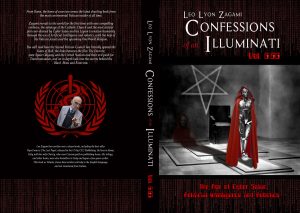
Leo Zagami is a regular contributor to Infowars and the author of the new groundbreaking book Confessions of an Illuminati Vol. 6.66 The Age of Cyber Satan, Artificial Intelligence, and Robotics
OUT NOW ON KINDLE:
https://www.amazon.com/Confessions-Illuminati-6-66-Artificial-Intelligence-ebook/dp/B07NS8WS9V/ref=sr_1_2?s=books&ie=UTF8&qid=1550411820&sr=1-2&keywords=vol.+6.66
And on paperback :
https://www.amazon.com/dp/1796904694/ref=cm_sw_r_fa_awdo_t1_2dvACb2HVH6TP?fbclid=IwAR1h_VlIytuACI3zxXUc9mBfOk96N4Yk0WH3To6Psv2kbFxJLwfzAwV4mUE
Leo Zagami is also the author of Confessions of an Illuminati Volume 5: The Decline of the West and the Rise of Satanism in our Society
OUT NOW ON KINDLE: https://www.amazon.com/dp/B07BQVQ9ZM/ref=tsm_1_fb_lk
And on paperback : https://www.amazon.com/dp/1986894657/ref=sr_1_8?ie=UTF8&qid=1522233257&sr=8-8&keywords=leo+zagami